

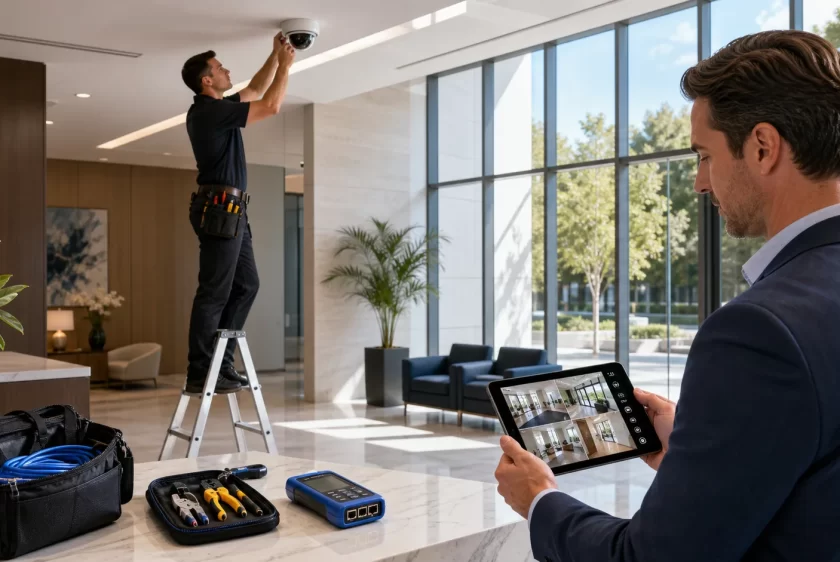
Make Your Security Cameras Work Their Best This Fall
A new camera system should feel like peace of mind, not another thing to worry about. The truth is, the first 30 to 60 days after professional security camera installation in Westchester are when real life starts to test your setup. Shorter days, earlier sunsets, changing foliage, and more activity around your home or business all show how your system really performs.
This is the perfect time to fine-tune. Many people notice the same issues: night video that looks too blurry or dark, alerts for every headlight on the street, cameras that go offline when Wi-Fi is busy, or confusion about who can see what in the app. This checklist is for homeowners and business owners who already have a professionally installed system and want to be sure it is dialed in before late fall and the busy holiday season. We will walk through practical checks you can do, and where it makes sense to bring in a local pro to adjust and maintain your system as your property, routines, and risks change.
Fixing Blurry or Dark Night Footage Before Clocks Fall Back
As nights get longer, weak spots in night vision show up fast. Bright headlights on wet pavement, strong backyard floodlights, or decorative lighting can wash out faces and license plates. On the other side, deep shadows can hide details you expect to see clearly.
Start with a simple night-vision checklist:
- Check each camera lens for dust, pollen, raindrops, or spider webs
- Look for nearby light sources shining straight into the lens
- Review infrared (IR) settings and test with IR on and off if your system allows
- Turn on or adjust Wide Dynamic Range (WDR) or exposure controls if your cameras support them
If a lens is dirty or covered in webs, even a high quality camera will look bad at night. Light angle matters too. A camera aimed straight at a bright porch light or driveway floodlight can create a white blur on screen. Often a small tilt or slight shift to one side is enough to cut glare.
Lighting on the property matters just as much as camera settings. Some helpful practices are:
- Pair cameras with motion-activated lighting in dark areas
- Avoid aiming deep into pitch black zones where the IR cannot reach
- Make sure doors, gates, and parking spots have even, gentle light rather than one harsh spotlight
If, after these checks, your video is still grainy, washed out, or too dark, that is when a professional should step in. A pro may adjust lens focus, change viewing angle more precisely, add or move lighting, or recommend upgraded cameras for areas like parking lots or long driveways.
Stopping Wi-Fi Dropouts Before Holiday Traffic Increases
Network issues can make a good camera system feel unreliable. Common warning signs include cameras freezing in the app, a long delay when you open live view, missing clips overnight, or constant “device offline” messages. This often happens during peak evening hours when everyone is home streaming TV, gaming, and using smart devices.
A basic network health checklist looks like this:
- Confirm that high-priority cameras over doors, driveways, or registers are hard-wired when possible
- Check where your router and access points sit and avoid tucking them in closets or behind metal objects
- Make sure your router and recorders are running current firmware
- Ask your installer or IT support about placing cameras on a dedicated network or VLAN if your system and router support it
Fall and early winter can hit Wi-Fi hard. People come home earlier, spend more time inside, and bring more connected devices online. Holiday decorations that use Wi-Fi or smart plugs can also compete for bandwidth. When the network is not planned for that load, security footage can stutter or fail to record smoothly just when you need it.
For larger homes, multi-story buildings, or busy businesses, a professional network assessment can make a big difference. Proper access point placement, thoughtful cable runs, and router settings tuned to the number of cameras and their recording quality keep your system stable even when the rest of the network is busy.
Dialing in Motion Zones to Reduce Alerts, Not Visibility
Nobody wants their phone buzzing every few minutes for passing cars or a neighbor’s dog. At the same time, you do not want to miss a real visitor or suspicious activity. The goal is to shape motion zones so they focus on useful activity and ignore the rest.
Start by walking through each camera view:
- Check what areas are in the frame that you do not care about, like public streets or sidewalks
- Use privacy or motion masks to block those areas if your system supports it
- Turn on “people” or “vehicle” detection modes where available
- Use different sensitivity levels for daytime and nighttime if your cameras or recorder allow schedules
Seasonal changes affect motion rules more than many people expect. Falling leaves, swaying branches, and shifting shadows can all trigger motion. So can new yard decor, temporary signs, or delivery piles near entrances. Revisiting zones and sensitivity before late fall helps you avoid “alert fatigue,” where you stop paying attention because there are simply too many notifications.
On simple residential setups, you may be able to get close on your own, then have a pro polish the details. On more complex properties, like parking lots, shared driveways, or multi-entrance businesses, expert help is often worth it. A professional can design zones and rules that recognize normal patterns and still flag what does not belong.
Getting Storage, Retention, and App Permissions Right
A camera system is only useful if you can go back and review what happened when you were not watching live. That is where storage and retention come in. You want enough history to cover weekends, trips, or holiday closures. Some businesses also follow internal policies or local rules on how long video should be saved.
Here are smart storage checks to do:
- Confirm recording quality and frame rate for each camera, since higher quality uses more space
- Check how many days of video you are actually keeping right now, not just what you think you are keeping
- Understand which cameras record 24/7 and which record on motion only
- Test playback both from your recorder on-site and from your mobile app
If storage fills too fast, you may need to lower quality on low-priority cameras or change which ones record all the time. If you do not have enough history, you might need more storage capacity or a different recording plan.
App and user permissions are just as important. Families, staff, and managers do not always need the same level of access. Good practice includes:
- Setting clear roles, like view-only for some users and admin-level for a small number of trusted people
- Removing access for former employees, temporary workers, or past household helpers
- Confirming that alerts are going to the right people, for the right cameras, at the right times
Fine-tuning these settings helps Westchester homes and businesses match video access and storage to real-world risk, whether it is a single-family house, a small shop, or a multi-site office. A well-planned system should feel simple to use, not confusing or overwhelming.
Schedule a Local Post-Install Checkup with LinkedUp Security
Once you walk through this checklist, you may find that a few small changes fix most of your concerns. You might also spot issues that keep coming back, like stubborn blurry night views, constant offline alerts, or motion zones that still are not quite right. That is when a seasonal tune-up makes sense, before year-end travel, busy shopping days, or winter weather.
At LinkedUp Security, we install custom camera, alarm, and access control systems for homes and businesses across Westchester, Putnam, Dutchess, Orange, and nearby areas. We also help keep those systems performing well through ongoing adjustments, firmware updates, network checks, and changes to motion settings or user access as your property and routines change. A post-installation review focused on your entrances, parking areas, and daily patterns can turn a “good enough” camera setup into one that quietly does its job every day and every night.
Protect Your Property With Expert Camera Installation Today
If you are ready to upgrade your security, LinkedUp Security is here to design and install a system tailored to your home or business. Learn how our professional security camera installation in Westchester can give you clearer visibility and faster incident response. We will walk you through the best equipment options, placement, and monitoring to fit your budget and needs. Have questions or want to schedule a consultation now? Just contact us and we will get back to you promptly.


